
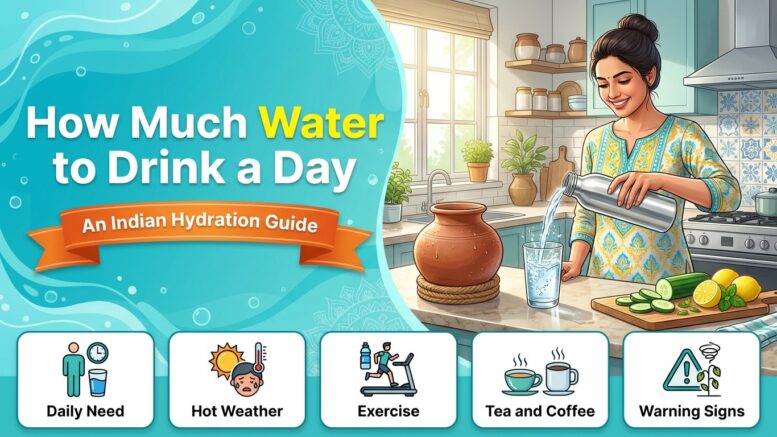
“Drink eight glasses of water a day” is the most repeated health tip in India, but your real need depends on the weather, your activity and your diet. Here is a simple, evidence-based answer to the question “how much water should you drink a day?”, with easy ways to check whether you are well hydrated.
Key takeaways
- ICMR-NIN’s Dietary Guidelines for Indians (2024) suggest about 2 litres of fluid a day for a healthy adult, including beverages.
- Needs rise in hot weather and with heavy physical activity because of sweating.
- Food, especially fruits and vegetables, also adds water to your day.
- Pale yellow urine usually means you are drinking enough.
- Drinking far more than you need can be harmful, so do not force litres of water.
How much water should you drink a day?
A healthy adult in a normal climate needs roughly 2 litres of fluid a day. The ICMR-National Institute of Nutrition’s Dietary Guidelines for Indians (2024) describe this as about eight glasses of water, including other beverages. The guidelines also note that requirements increase in very hot weather and during vigorous physical activity, because a lot of water is lost through sweat.

You may also see higher figures online. The US National Academies of Sciences set “adequate intake” for total water (from all drinks and food) at about 3.7 litres a day for men and 2.7 litres for women. These figures include water from food, which makes up roughly 20% of intake, so they are not a target for plain water alone.
Key terms explained
- Total water intake: water from plain water, other drinks and food combined.
- Dehydration: when your body loses more fluid than it takes in.
- Hyponatraemia: low blood sodium, which can happen when a person drinks excessive water in a short time.
Who needs more (or less) water?
Needs vary by person. The table below gives a simple guide to common situations.
| Situation | What changes | What to do |
|---|---|---|
| Office work in a cool room | Low sweat loss | Around 2 litres of fluid a day is usually enough |
| Hot, humid summer days | Higher sweat loss | Drink more often; add buttermilk or lemon water |
| Exercise or outdoor work | Fluid and salt lost through sweat | Drink before, during and after activity |
| Older adults | Thirst sensation can weaken with age | Drink at regular times rather than waiting to feel thirsty |
| Pregnancy and breastfeeding | Higher overall needs | Follow your doctor’s advice on daily fluid intake |
| Kidney, heart or liver conditions | Some people must limit fluids | Follow your doctor’s specific fluid limit |
Do tea, coffee and other drinks count?
Yes, most drinks count towards your daily fluids, but some are better choices than others. ICMR-NIN advises keeping caffeine below 300 mg a day. A 150 ml cup of brewed coffee has about 80-120 mg of caffeine, instant coffee 50-65 mg and tea 30-65 mg, as reported from the guidelines by ETV Bharat. The guidelines also suggest avoiding tea and coffee for an hour before and after meals, because tannins reduce iron absorption.
Soft drinks and packaged fruit drinks are not a substitute for water. Better options in summer include buttermilk, lemon water without much sugar and tender coconut water. People with kidney or heart disease should check with their doctor before drinking coconut water, as it is high in potassium.
How can you tell if you are drinking enough?
The simplest check is your urine colour and your thirst. Pale yellow urine usually means good hydration, while dark yellow or amber urine suggests you need more fluid. Other signs of mild dehydration include headache, tiredness, dry mouth and dizziness.
Practical tips to stay hydrated
- Keep a 1-litre bottle at your desk and aim to finish and refill it once during the day.
- Have a glass of water with every meal and after waking up.
- Eat water-rich foods such as cucumber, watermelon, oranges and curd.
- Carry water when travelling, especially on long train or road journeys.
- Drink small amounts regularly during exercise instead of a large amount at once.
- Choose safe drinking water: boiled, filtered or sealed packaged water with an ISI mark.
Common mistakes to avoid
- Forcing yourself to drink 4-5 litres a day without a medical reason.
- Counting sugary soft drinks and packaged juices as healthy hydration.
- Waiting until you are very thirsty on hot days.
- Ignoring a doctor’s fluid limit if you have kidney or heart disease.
Related reads on TON
- Why drinking too much water can be dangerous
- How to check the safety of packaged drinking water
- Simple health tips for high-pollution days
Frequently Asked Questions
Is 8 glasses of water a day a myth?
It is a rough guide, not a strict rule. About eight glasses (2 litres) of total fluid suits many healthy adults, but your needs change with heat, activity and diet.
Can you drink too much water?
Yes. Drinking very large amounts quickly can dilute blood sodium and cause hyponatraemia, which can be serious. Drink to thirst and spread your intake through the day.
Is it bad to drink water while eating?
No. A glass of water with meals is fine for most people and can help digestion. Avoid drinking very large amounts at once if it makes you feel uncomfortably full.
Does water from food count?
Yes. Fruits, vegetables, dal, curd and soups add a meaningful amount of water to your day.
How much water should children drink?
Children’s needs depend on age, weight and activity. Offer water regularly, especially in summer and after play, and ask your paediatrician if you are unsure.
This article is for general wellness information only and is not medical advice. Please consult a doctor for advice on your own health.
Bookmark Trending Online Now and follow us for more simple, practical health tips.
By TON Editorial Team · Last updated November 2026. Check the ICMR-NIN Dietary Guidelines for Indians for the latest details.