
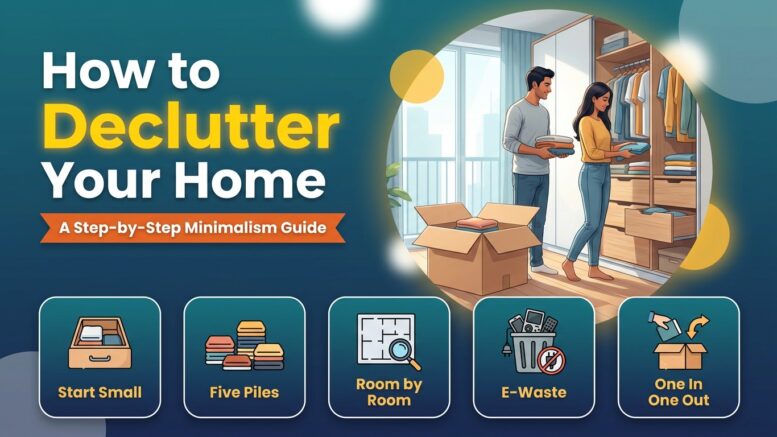
A cluttered home can make everyday life feel busier than it needs to be, from hunting for keys to cleaning around piles of things you never use. This step-by-step guide explains how to declutter your home the minimalist way, room by room, and how to responsibly donate, sell or recycle what you no longer need.
Key takeaways
- Start small, with a drawer or one shelf, to build momentum.
- Use five clear categories: keep, donate, sell, recycle and discard.
- Research links visual clutter with reduced focus and higher stress.
- Electronics must go to authorised e-waste collectors, not the regular bin.
- A “one in, one out” rule stops clutter from building up again.
What is decluttering and minimalism?
Decluttering means removing items you do not use, need or love, so the things you keep are easy to find and maintain. Minimalism is the wider habit of owning fewer, more useful things. You do not have to live with bare walls; the goal is a home that works for your family, not an empty one. The idea is not new in India either, as our piece on India’s long tradition of reducing and reusing shows.
Why does decluttering help?
Less clutter means less cleaning, faster routines and often a calmer mind. A 2011 study by Princeton University researchers in the Journal of Neuroscience found that multiple visual stimuli compete for the brain’s attention, which can make it harder to focus. A 2010 study by UCLA researchers published in Personality and Social Psychology Bulletin found that women who described their homes as cluttered tended to have less healthy daily cortisol (stress hormone) patterns. These studies do not prove clutter causes stress for everyone, but they support what many people feel: tidy spaces are easier to live in.
How to declutter your home step by step
The simplest method is to empty one small space, sort everything into five piles and put back only what earns its place.

- Pick one small area. A bathroom shelf or a kitchen drawer is ideal for day one.
- Empty it completely. Seeing everything together shows how much you really have.
- Sort into five piles: keep, donate, sell, recycle and discard.
- Ask simple questions: Have I used this in the last year? Would I buy it again today? Do I have a duplicate?
- Clean the space before putting items back.
- Give every item a home and group similar things together.
- Remove the outgoing piles the same week, so they do not creep back in.
Room-by-room decluttering checklist
Each room has its own typical clutter, so tackle the easy wins first and decide where each item should go.
| Room | What to clear first | Where it can go |
|---|---|---|
| Kitchen | Expired spices and packets, chipped crockery, duplicate gadgets, extra plastic containers | Discard expired food; recycle plastics; donate usable utensils |
| Wardrobe | Clothes that do not fit or have not been worn in a year, single socks, damaged shoes | Donate wearable clothes; repurpose old cotton as cleaning cloths |
| Living room | Old newspapers and magazines, broken decor, tangled cables | Sell paper to the kabadiwala; recycle cables as e-waste |
| Bathroom | Expired medicines and cosmetics, empty bottles | Ask your pharmacist about medicine disposal; recycle bottles |
| Study or work area | Old bills, dead pens, outdated chargers and gadgets | Shred personal papers; give gadgets to an authorised e-waste collector |
While clearing the kitchen, plan meals around what is already in the cupboard; our tips on reducing food waste at home help you use up older stock before it expires.
How should you dispose of old electronics?
Old phones, chargers, batteries and appliances should go to an authorised e-waste collector or a brand’s take-back programme.
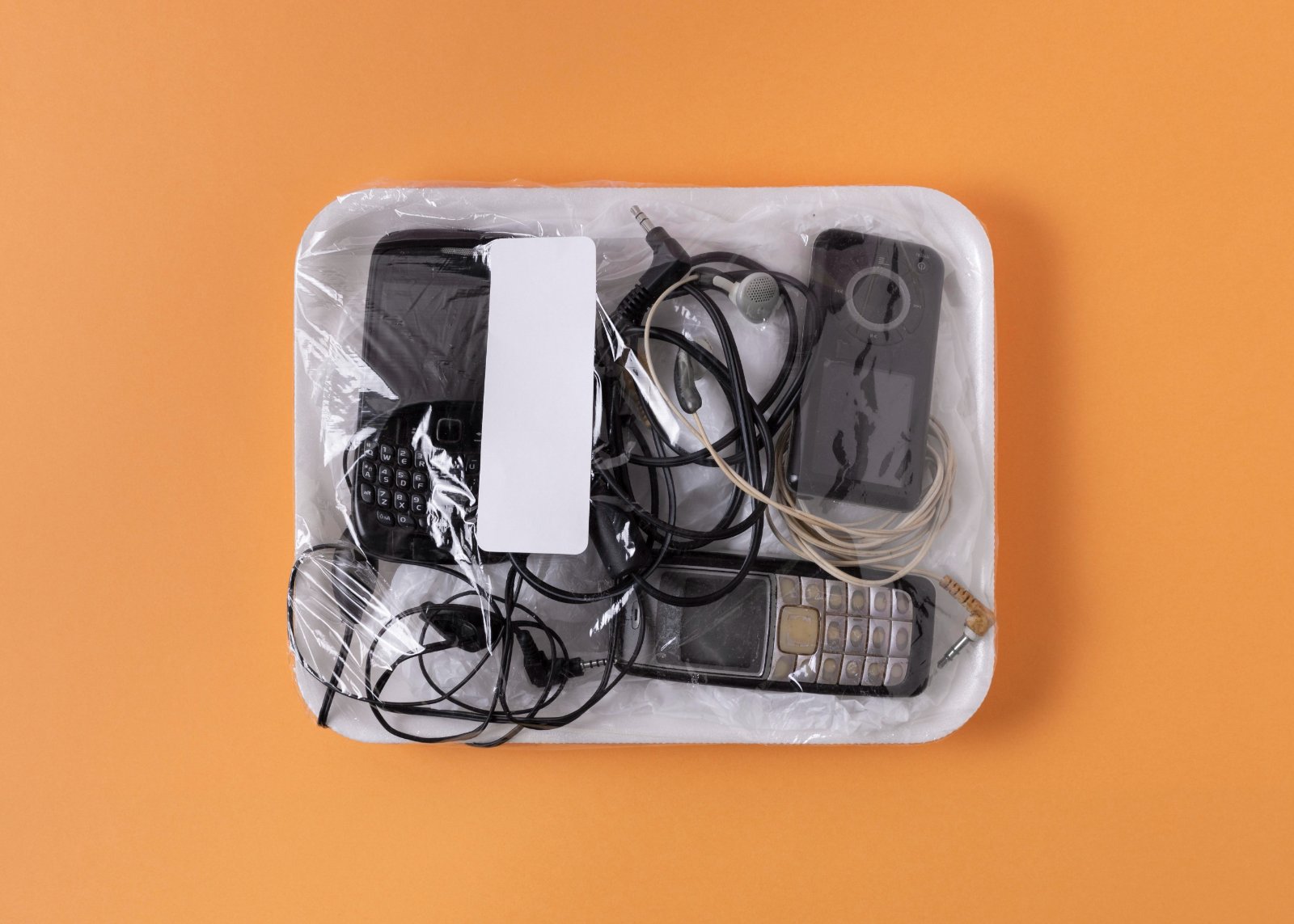
Under India’s E-Waste (Management) Rules, 2022, producers must arrange collection and recycling, and the Central Pollution Control Board lists registered recyclers. Before handing over a phone or laptop, back up your data, sign out of all accounts and do a factory reset; you can also note its IMEI and check its status using the steps in our Sanchar Saathi CEIR guide. Replacing a very old fridge or geyser at the same time? An efficient model can also help reduce your electricity bill.
Practical tips to keep your home clutter-free
- Follow “one in, one out”: when something new comes in, something old leaves.
- Set a 15-minute daily reset before bed.
- Keep a donation bag in a cupboard and fill it as you go.
- Unsubscribe from shopping app notifications to reduce impulse buys; a short digital detox helps here too.
- Digitise warranties and bills, and store important originals in one labelled file.
- Declutter seasonally, for example before Diwali cleaning or a summer break.
Common mistakes to avoid
- Trying to declutter the whole house in one weekend and burning out.
- Buying storage boxes before reducing what you own.
- Keeping things “just in case” when they are cheap and easy to replace.
- Decluttering other family members’ belongings without asking.
- Throwing batteries and electronics into household waste.
Related reads on TON
- Buy recycled products to live an environment-friendly life
- Things you can do in your kitchen to keep pests out
- How to remove smoke odour from your apartment
Frequently Asked Questions
Where should I start decluttering?
Start with a small, low-emotion space such as a bathroom shelf or kitchen drawer. Quick wins make it easier to tackle wardrobes and sentimental items later.
How do I declutter sentimental items?
Keep a few meaningful pieces and photograph the rest. A single memory box per person is a practical limit for most families.
What is the 20/20 rule in decluttering?
It is a popular guideline: if you can replace an item for under about INR 2,000 in under 20 minutes, you can usually let it go. Adjust the figure to suit your budget.
Where can I donate old clothes in India?
Many NGOs, local shelters and clothing-collection drives accept clean, wearable clothes. Some retail brands also run take-back programmes.
How often should I declutter?
A quick daily reset and a deeper declutter every three to six months keeps most homes under control.
Bookmark Trending Online Now and follow us for more practical home and lifestyle guides.
By TON Editorial Team · Last updated November 2026. Check the Central Pollution Control Board for the latest e-waste disposal details.