
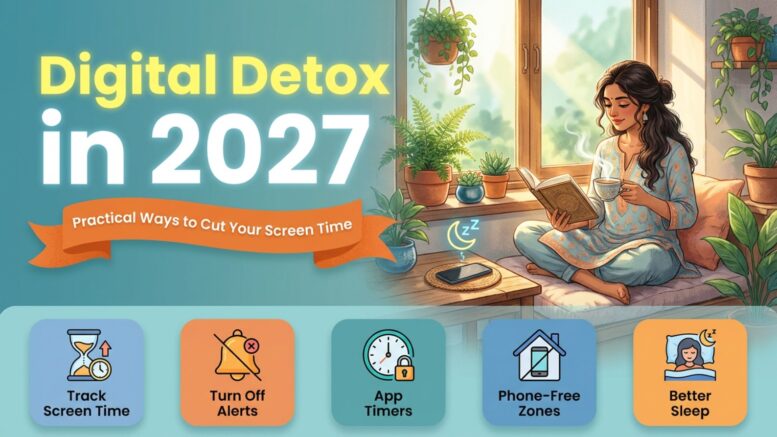
Do you reach for your phone before you are fully awake? You are not alone. A digital detox in 2027 doesn’t mean giving up technology. It means using it on your own terms. Here’s how to start.
How Much Time Are We Spending on Screens?
India is one of the world’s largest online populations. DataReportal’s Digital 2027 India report counts about 1.04 billion internet users in the country, around 70% of the population, as of October 2026. An EY report cited by Bloomberg in 2025 estimated that Indians spent about 1.1 trillion hours on smartphones in 2024, roughly five hours a day per user, with most of that time going to social media, video and gaming.
The Economic Survey 2025–26 also flagged digital addiction as a growing concern for young people aged 15 to 24, and suggested ideas such as digital wellness lessons in schools and tech-free zones, according to ThePrint.
Signs You Might Need a Digital Detox
If several of these sound familiar, it may be time to reset your screen habits.

- You check your phone within minutes of waking up.
- You lose track of time while scrolling.
- Your sleep is affected by late-night screen use.
- You feel restless or anxious when away from your phone.
- Screen time is eating into time with family, friends or hobbies.
Benefits of Cutting Back
Reducing screen time can free up hours for exercise, hobbies and people you care about. Many people find that putting the phone away before bed helps them fall asleep more easily, and that fewer notifications make it easier to focus on one task at a time. The goal is balance: keeping the useful parts of technology while dropping the habits that drain your time and energy.
A Simple 7-Day Digital Detox Plan
| Day | Action |
|---|---|
| Day 1 | Check your screen-time report to see where your hours go |
| Day 2 | Turn off non-essential notifications |
| Day 3 | Set app timers for your two most-used apps |
| Day 4 | Keep your phone out of the bedroom at night |
| Day 5 | Make meals screen-free |
| Day 6 | Spend an hour outdoors without your phone |
| Day 7 | Review your progress and choose habits to keep |
Use the Tools Already on Your Phone
Android: Google’s Digital Wellbeing (found in Settings) shows your daily screen time, unlocks and notifications. You can set App timers, turn on Bedtime mode to switch your screen to greyscale at night, and use Focus mode to pause distracting apps.
iPhone: Apple’s Screen Time lets you schedule Downtime, set App Limits, choose apps that are Always Allowed, and manage content restrictions. Parents can also set limits on a child’s device.
Practical Tips That Actually Work
Small, steady changes work better than an all-or-nothing approach.

- Move apps off your home screen: A little extra effort to open an app reduces mindless checking.
- Create phone-free zones: The dining table and bedroom are good places to start.
- Replace, don’t just remove: Fill freed-up time with reading, a walk, cooking or a hobby.
- Batch your messages: Check chats and email at set times instead of all day.
- Use a regular alarm clock: This keeps your phone out of reach first thing in the morning.
- Be kind to yourself: Aim for progress, not perfection. Small changes add up.
Screen Time for Children
For families, guidance from health bodies is a useful reference. The World Health Organization’s 2019 guidelines recommend no screen time for children under one, and no more than one hour a day for children aged two to four, with less being better. The Indian Academy of Pediatrics recommends no screens for children under two (except video calls with family), up to one hour a day of supervised screen time for ages two to five, and less than two hours a day for ages five to ten. Both stress active play and good sleep. If you are concerned about a child’s screen habits, sleep or mood, speak to a paediatrician.
If screen use is affecting your mental health, consider talking to a doctor or counsellor. India’s Tele-MANAS mental health helpline (14416) offers free support.
Related reads on TON
- SpiceJet Flight Cancellations: Your Refund and Compensation Rights
- The Best Movies & TV Shows to Watch in 2026: Your Ultimate Entertainment Guide
- 2026 Health Trends: What You Need to Know for a Healthier Year
Frequently Asked Questions
What is a digital detox?
A digital detox is a period of reducing or pausing the use of phones, social media and other screens to improve focus, sleep and well-being.
How long should a digital detox last?
There is no fixed rule. Many people start with a few screen-free hours a day or a single phone-free day each week, then build lasting habits.
How do I check my screen time?
On Android, open Settings and go to Digital Wellbeing. On iPhone, open Settings and tap Screen Time.
Information as of November 25, 2026. Check the WHO guidelines and Google’s Digital Wellbeing help page for the latest updates.