
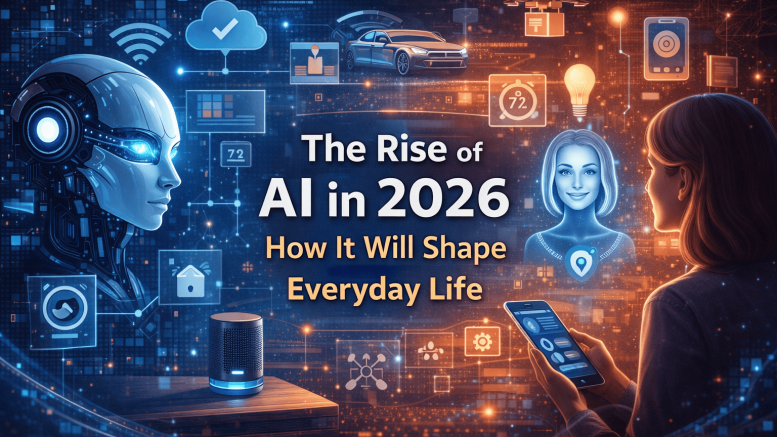
The AI Revolution in Everyday Life
By 2026, artificial intelligence (AI) will no longer be a futuristic concept; it will be embedded deeply into our daily lives. From personalized home automation systems to virtual assistants that understand our needs before we even speak, AI will fundamentally change the way we live, work, and interact.
However, as we race towards this AI-driven future, many still wonder: how exactly will these technologies shape everyday experiences? Will AI be a force for convenience and productivity, or will it create new challenges? In this article, we will explore the most exciting AI trends, from consumer tech to home automation, and provide insights into how AI will revolutionize personal assistance in the near future.
AI in Daily Life: Key Areas of Impact
1. Consumer Technology: Smart Devices and Personalized Experiences
Artificial intelligence is set to redefine the consumer tech landscape in 2026. We already see the beginning of this shift with smart devices like smartphones, wearables, and home assistants, but AI’s potential is far from fully realized.
-
Smarter Devices: By 2026, devices will be even more responsive to individual preferences. Imagine your phone automatically adjusting settings based on your routine or your smartwatch predicting your health needs before you experience symptoms.
-
Hyper-Personalization: AI will enable hyper-personalized experiences across all digital interfaces. E-commerce platforms will suggest products with near-perfect accuracy, streaming services will recommend movies before you even think of them, and social media feeds will be curated to provide maximum engagement based on deep learning algorithms.
Example: A voice assistant could not only answer your questions but anticipate needs—like ordering groceries based on your schedule and preferences. It could also suggest optimal routes for your commute, monitor your energy usage, and suggest cost-saving adjustments in real-time.
2. Home Automation: A New Era of Convenience and Control
In the home, AI-powered automation will become an integral part of managing our living spaces. What we now consider “smart homes” will be transformed into intelligent homes that adapt to our behaviors and environment.
-
AI-driven Home Systems: By 2026, AI will manage everything from your lighting and temperature to your home security and entertainment systems. Imagine a home that adjusts the temperature when you walk into a room, or one that automatically locks doors and windows based on time of day or security needs.
-
Health Monitoring: Home health systems powered by AI could monitor air quality, track your sleep, detect allergens, and even remind you to take medications. Smart refrigerators could track your food inventory, suggest recipes, and even reorder groceries when supplies are low.
Example: Home assistants will not only control smart lights but also make decisions for you—like dimming the lights for a movie night or opening windows for optimal ventilation based on environmental conditions and health data.
3. Personal Assistance: AI That Understands You Better
AI-driven personal assistants are rapidly becoming more than just voice-command tools—they’re evolving into intelligent companions that understand and anticipate our needs.
-
Virtual Companions: By 2026, AI-powered personal assistants will be able to engage in more natural, human-like conversations. They will know your preferences, schedule, and even mood. For example, your personal assistant might suggest a relaxing activity after a stressful workday or suggest content that aligns with your evolving interests.
-
Work Efficiency: AI will also revolutionize how we work. Virtual assistants will automate repetitive tasks, like scheduling meetings, organizing emails, or creating documents. AI-driven apps will analyze productivity patterns and offer real-time feedback on how to optimize work schedules.
Example: Instead of just setting reminders, your assistant could offer proactive support—like suggesting a meeting time that works for everyone based on past preferences and availability or even drafting responses to emails based on past interactions.
AI Trends in 2026: What to Expect
1. Natural Language Processing (NLP) and Communication
Natural Language Processing (NLP) will be at the heart of the AI revolution in 2026. AI’s ability to understand and process human language will enable more intuitive interactions between humans and machines.
-
Voice and Text-Based AI: We’ll see advancements in AI’s ability to understand context, sarcasm, and nuance in conversations, allowing for better communication through voice or text interfaces.
-
AI in Healthcare: AI will interpret and process medical records and data more accurately, assisting doctors and health professionals in diagnosing and treating patients.
Example: An AI health assistant could analyze a patient’s symptoms, review their medical history, and recommend a diagnosis or a treatment plan that aligns with the latest research and best practices.
2. AI Ethics and Privacy Concerns
As AI becomes more integrated into everyday life, ethical considerations surrounding AI’s use will intensify.
-
Data Privacy: With AI collecting and processing vast amounts of personal data, concerns about how this data is stored and used will continue to grow.
-
Bias in AI: Ensuring that AI systems are free of bias will become a major priority, especially in sectors like hiring, law enforcement, and healthcare.
Example: AI developers will work on creating systems that are transparent, offering users more control over their data and providing clearer explanations of AI decision-making processes.
3. Autonomous Vehicles and Transportation
Autonomous driving technology will continue to evolve, and by 2026, self-driving cars could be a mainstream mode of transportation.
-
Smart Traffic Management: AI will optimize traffic flow in cities, reducing congestion and improving safety. Smart vehicles will communicate with each other and with traffic infrastructure to prevent accidents and improve the driving experience.
-
On-Demand Transportation: Self-driving vehicles could lead to the rise of on-demand transportation fleets, making personal car ownership less necessary.
Example: AI-powered vehicles will offer a seamless travel experience, adjusting routes, vehicle settings, and even entertainment options based on the passenger’s preferences.
FAQ: The Rise of AI in 2026
1. How will AI impact home automation in 2026?
AI will enable homes to adapt to your behavior, optimizing everything from energy use to security systems, creating a more personalized and efficient living environment.
2. What are the major AI trends we can expect in 2026?
Key trends include improved Natural Language Processing for better communication, more widespread use of AI in healthcare, and advancements in autonomous transportation.
3. Will AI in 2026 be able to predict my needs?
Yes, AI will be able to anticipate your needs by learning from your behavior patterns, preferences, and environmental data, offering a more intuitive and proactive experience.
4. How will AI change the way we interact with technology?
AI will make technology more intuitive, allowing for human-like conversations, improved personalization, and smarter decision-making across devices.
5. Are there privacy concerns with AI in daily life?
Yes, data privacy and AI bias are significant concerns. Developers will focus on ensuring that AI systems respect privacy, offer transparency, and minimize bias in decision-making.
6. Will AI in 2026 lead to job loss?
AI will automate many repetitive tasks, but it will also create new opportunities in fields like AI development, healthcare, and technology services. The key will be upskilling to adapt to new roles.
7. How can businesses prepare for AI in 2026?
Businesses should invest in AI technologies, ensure their data privacy practices are up to date, and prepare their workforce for the new opportunities AI will bring.
Embrace the AI Revolution in 2026
AI is on the brink of transforming everyday life in ways we never imagined. From smarter homes to virtual assistants that feel almost human, AI will be a fundamental part of daily experiences by 2026. However, with these advancements come new challenges, particularly in areas like data privacy, bias, and job displacement.
As AI continues to evolve, businesses and individuals alike must adapt to fully embrace its potential. Whether you’re a consumer looking for more convenience or a business seeking to stay ahead of the curve, AI is the future, and the time to prepare is now.
Ready to harness the power of AI in your daily life or business? Start exploring AI-driven solutions today and stay ahead of the curve as the technology continues to reshape the world around us.
